

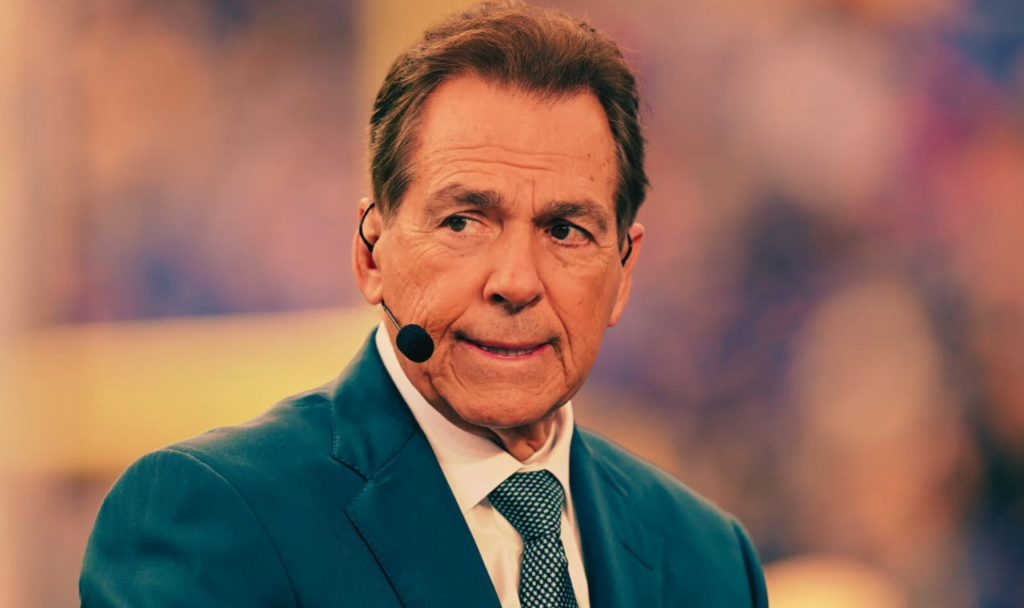
Nick Saban is universally recognized as one of the most influential figures in college football history. From his beginnings in West Virginia to building an unparalleled dynasty at the University of Alabama, Saban’s career is a testament to discipline, precision, and relentless focus. Known for his philosophy called “The Process,” he revolutionized every facet of college athletics, including recruiting, player development, and program management.
Understanding Nick Saban’s life and legacy involves more than just counting wins. It’s about exploring the journey of a man who combined intelligence, strategy, and leadership to redefine success in college football. This article delves into his early life, career milestones, achievements, coaching style, and the enduring impact of his dynasty.
Early Life and Foundations of a Coaching Legend
Nick Saban was born on October 31, 1951, in Fairmont, West Virginia. Raised in the small town of Monongah, his upbringing was steeped in hard work and football culture. His father ran a service station and a Pop Warner team, instilling a strong work ethic and love for the game from a young age.
Saban’s formative years shaped his mindset for future success. At Monongah High School, he excelled as a quarterback, demonstrating leadership skills that would define his coaching career. Attending Kent State University, he played defensive back under Coach Don James, where he learned the principles of teamwork, discipline, and mental toughness that would later form Nick Saban’s coaching philosophy.
College Playing Career
- Played defensive back at Kent State
- Gained early exposure to structured coaching systems
- Developed tactical knowledge and leadership skills
- Met his future wife, Terry Constable
- Earned a master’s degree in business administration in 1977
Early Coaching Experiences
- Graduate assistant at Kent State (1973–1974)
- Assistant roles at Syracuse, West Virginia, and Navy
- Defensive backs coach under Bear Bryant at Alabama (1980)
- Learned program-building fundamentals and culture management
- Developed a blueprint for success that would guide his career
Early Head Coaching Opportunities
Nick Saban’s coaching career began to accelerate in the late 1980s and early 1990s.In 1990, he took on his first head coaching position in collegiate football at Toledo University.. In a single season, he led the Rockets to a 9-2 record and a Mid-American Conference (MAC) championship.
The NFL Experience
- Defensive backs coach for Houston Oilers (1989)
- Defensive coordinator for Cleveland Browns under Bill Belichick (1991–1994)
- Gained experience in professional-level defensive strategies
- Observed disciplined culture and complex play-calling
- Lessons from the NFL influenced Saban’s later collegiate dominance
Michigan State Tenure
- Head coach at Michigan State (1995–1999)
- Built a competitive program from the ground up
- Improved the team record year by year
- A 9-2 record and a victory over #1 Ohio State were part of the 1999 campaign.
- Prepared Saban for the challenges of LSU and Alabama
Establishing a Dynasty at LSU
Nick Saban’s tenure at Louisiana State University (LSU) marked the beginning of his national prominence. Taking over in 2000, Saban implemented “The Process”, focusing on daily improvement, discipline, and elite recruiting.
LSU Achievements
- Won SEC Championship in 2001
- 2003: 13-1 record, Sugar Bowl victory over Oklahoma
- First national title as a head coach
- Built LSU into a defensive powerhouse
- Overall LSU record: 48-16
Recruitment and Program Building
- Focused on attracting top-tier talent nationwide
- Emphasized player development and academic discipline
- Integrated nutrition, strength, and mental conditioning
- Left a lasting culture of professionalism at LSU
- LSU became a stepping stone to the NFL and Alabama opportunities
NFL Challenges and Return to Alabama
After winning the national championship with LSU, Saban accepted the Miami Dolphins head coaching role in 2005. The NFL experience proved challenging:
Miami Dolphins Tenure
- First season: 9-7
- Second season: 6-10
- Limited control over personnel and operations
- Reinforced Saban’s preference for collegiate environments
- Returned to Alabama in January 2007 with full program authority
At Alabama, Saban was given CEO-level control, including facilities, staffing, and recruiting budgets. His approach transformed the Crimson Tide into a powerhouse of modern college football.
Alabama Football Dynasty
Nick Saban’s era at Alabama (2007–2023) is widely regarded as the most dominant period in college football history. By instilling discipline, innovation, and “The Process,” he reshaped Alabama into a perennial national champion.
Major Achievements at Alabama
- 7 national championships (2009, 2011, 2012, 2015, 2017, 2020)
- 8 SEC titles
- Produced 3 Heisman Trophy winners: Mark Ingram, Derrick Henry, DeVonta Smith
- Developed NFL-ready talent consistently
- Recruited top-ranked classes nearly every year
Strategic Adaptation
- Integrated spread offenses and modern quarterback systems
- Hired innovative coordinators to match evolving football trends
- Emphasized strength, conditioning, and mental toughness
- Managed media pressure and external distractions effectively
- Maintained a singular focus on execution and performance
Nick Saban Career Timeline & Coaching Records
| Team / University | Years | Overall Record | Conference Titles | National Titles |
| Toledo | 1990 | 9-2 | 1 (MAC) | 0 |
| Michigan State | 1995–1999 | 34-24-1 | 0 | 0 |
| LSU | 2000–2004 | 48-16 | 2 (SEC) | 1 (2003) |
| Miami Dolphins (NFL) | 2005–2006 | 15-17 | N/A | N/A |
| Alabama | 2007–2023 | 201-29 | 8 (SEC) | 6 |
| Total (College) | — | 292-71-1 | 11 | 7 |
Legacy, Coaching Tree, and Influence
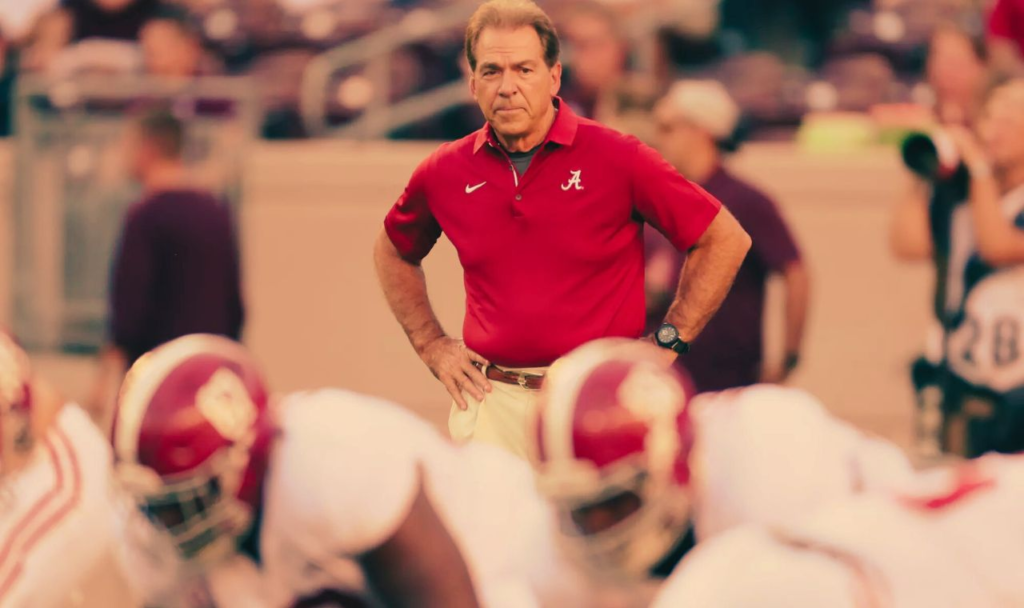
Nick Saban retired on January 10, 2024, leaving behind an unparalleled legacy. His impact goes beyond wins:
Coaching Tree
- Kirby Smart (Georgia)
- Lane Kiffin (Ole Miss)
- Steve Sarkisian (Texas)
- Mike Locksley (Maryland)
- Jimbo Fisher (Texas A&M)
Broader Influence
- Master recruiter and defensive strategist
- Mentor to thousands of players and assistant coaches
- Advocate for academic and personal development
- Legacy includes both championships and cultural transformation
- Considered the all-time top college football coach
Nick Saban’s Philosophy – “The Process”
Central to his success is The Process: a philosophy that emphasizes focus on each task rather than the outcome.
Key Principles
- Concentrate on the next practice, play, or game
- Ignore media hype and criticism (“rat poison”)
- Daily discipline in preparation and execution
- Embrace continuous improvement
- Build long-term success through consistent actions
FAQs
Q: How many national championships did Nick Saban win?
Seven – one with LSU (2003) and six with Alabama (2009, 2011, 2012, 2015, 2017, 2020).
Q: What was Nick Saban’s overall college record?
292 wins, 71 losses, 1 tie (292-71-1).
Q: Why did Saban leave the NFL for Alabama?
College football allowed full control over recruiting, staff, and facilities—better aligned with his process-oriented approach.
Q: What is “The Process”?
A philosophy focused on executing tasks perfectly in the moment, ignoring outcomes or external distractions, to achieve consistent excellence.
Q: Did any assistants become head coaches?
Yes, notable examples include Kirby Smart, Lane Kiffin, Steve Sarkisian, Mike Locksley, and Jimbo Fisher.
Q: When did Saban retire?
January 10, 2024.
Q: What is Saban doing post-retirement?
Advising the University of Alabama’s athletic department and continuing to influence the program indirectly.
Q: How many Heisman winners played under Saban?
Three – Mark Ingram (2009), Derrick Henry (2015), and DeVonta Smith (2020).
Q: What makes Saban the greatest college coach?
Consistency, championships, NFL player development, and creating a culture of excellence.
Q: How did Saban adapt to modern football?
Integrated spread offenses, advanced recruiting strategies, and embraced NIL and transfer portal rules.