

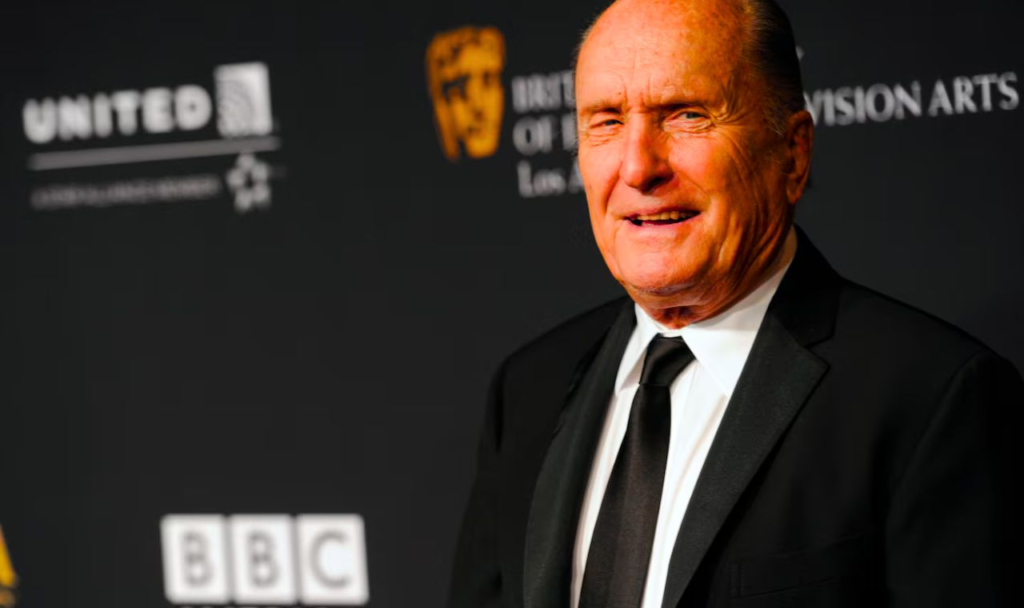
Robert Selden Duvall stands as one of the most revered figures in American cinema. Over a career spanning more than seven decades, Robert Duvall has delivered performances that have become cornerstones of Hollywood history. Celebrated as an “actor’s actor,” he possesses a rare ability to completely inhabit his roles, whether portraying a shrewd Consigliere, a commanding Lieutenant Colonel, or a heartbroken country singer. His commitment to authenticity and subtle mastery of the craft has secured his place among the greatest screen legends of all time.
The Early Life of a Legend
Born on January 5, 1931, in San Diego, California, Robert Duvall grew up in a disciplined military household. His father was a decorated Rear Admiral in the United States Navy, and his mother nurtured his love for performance through her amateur acting. Frequent moves during his childhood instilled resilience and adaptability. After graduating from Principia College in 1953 with a drama degree, Duvall served two years in the U.S. Army before moving to New York City to refine his craft at the renowned Neighborhood Playhouse School of the Theatre.
The New York Years: Roommates and Rivalries
In 1950s New York, Robert Duvall immersed himself in the “Method” acting movement under Sanford Meisner, who taught the principle of “living truthfully under imaginary circumstances.” During this formative period, he shared a small apartment with fellow actors Dustin Hoffman and Gene Hackman—two future Hollywood giants. These early years shaped Duvall’s unpretentious work ethic and forged a resilience that would define his acting career.
Breakthrough: To Kill a Mockingbird and the Rise of a Screen Legend
Robert Duvall made a silent yet unforgettable film debut as Boo Radley in To Kill a Mockingbird (1962). Despite not uttering a single word, he conveyed a profound depth of isolation and hidden kindness, instantly establishing himself as a cinematic talent to watch. Following this role, he appeared in films such as Bullitt and True Grit, steadily building a filmography that would grow to over 140 credits.
The 1970s, often called the “New Hollywood” era, marked the zenith of Robert Duvall’s rise. Iconic performances in major films solidified his reputation as a versatile and commanding actor.
Career Milestones and Achievements
Throughout his storied career, Robert Duvall achieved numerous accolades and critical recognition:
| Milestone Category | Notable Highlight | Year/Details |
| Film Debut | Boo Radley in To Kill a Mockingbird | 1962 |
| Academy Award Win | Best Actor for Tender Mercies | 1983 |
| Iconic Role | Tom Hagen in The Godfather | 1972 |
| Directorial Peak | The Apostle | 1997 |
| Longevity Record | Oldest Supporting Actor Nominee | 2015 (The Judge) |
| Lifetime Achievement | 70+ Years in Film | — |
| Date of Passing | Died at age 95 | February 15, 2026 |
Social Media & Online Presence
Although Robert Duvall preferred privacy in the digital era, fans could connect with his legacy and updates through these official channels:
- Official Facebook Page: Robert Duvall Official Facebook – Managed by his wife Luciana Pedraza, sharing announcements and news.
- Philanthropy: Robert Duvall Children’s Fund – Supporting families in Northern Argentina.
- Filmography & Career: IMDb Profile – Comprehensive details on all 140+ film and television credits.
- Family Updates: Luciana Pedraza Instagram – Occasional insights into their life and philanthropic work.
The Godfather and Tom Hagen
In 1972, Robert Duvall portrayed Tom Hagen, the trusted Consigliere to the Corleone family in The Godfather. Unlike more flamboyant performances, Duvall’s Hagen was understated yet pivotal, offering moral and strategic guidance to the family. His performance earned him his first Academy Award nomination and cemented Hagen as one of the most nuanced characters in crime cinema history.
“I Love the Smell of Napalm in the Morning”
In Apocalypse Now (1979), Robert Duvall delivered one of his most memorable performances as Lieutenant Colonel Bill Kilgore. Complete with a cavalry hat and a fearless swagger, Kilgore became a symbol of the chaotic and surreal nature of the Vietnam War. His line, “I love the smell of napalm in the morning,” remains one of cinema’s most quoted moments, highlighting Duvall’s ability to command the screen.
The Road to Oscar: Tender Mercies
After decades of being a legendary supporting actor, Robert Duvall took center stage in Tender Mercies (1983). Portraying Mac Sledge, a washed-up country singer seeking redemption, he performed his own singing and studied Texas small-town life to bring authenticity to the role. This award-winning performance earned him the Academy Award for Best Actor, cementing his status as an Oscar-winning actor and Hollywood icon.
FAQs
Has Robert Duvall ever won an Oscar?
Yes, Robert Duvall won the Academy Award for Best Actor for Tender Mercies in 1984. Over his career, he earned a total of seven Oscar nominations.
When did Robert Duvall pass away?
He passed away peacefully at his Virginia home on February 15, 2026, at the age of 95.
What is Robert Duvall’s most famous movie line?
“I love the smell of napalm in the morning,” from Apocalypse Now (1979).
Did Robert Duvall have an official Instagram account?
No, he preferred privacy. Official updates were shared via his verified Facebook page.
Who were Robert Duvall’s famous roommates?
Dustin Hoffman and Gene Hackman during his early years in New York.
What was Robert Duvall’s favorite role?
Augustus “Gus” McCrae in the miniseries Lonesome Dove.
Did Robert Duvall have children?
No. Although he was married four times, he did not have any children.
Legacy of a Hollywood Legend
Robert Duvall was more than an actor; he was a pillar of American cinema. His biography reflects decades of dedication, his filmography a masterclass in storytelling, and his cinematic legacy an enduring inspiration for actors and audiences alike. From the silent, haunting presence of Boo Radley to the commanding force of Lieutenant Colonel Kilgore, Robert Duvall brought humanity and depth to every role, leaving a screen legend whose influence will last for generations.